The Journal of Korean Association of Computer Education
[ Article ]
The Journal of Korean Association of Computer Education - Vol. 29, No. 2, pp.20-37
ISSN: 1598-5016 (Print) 2733-9785 (Online)
Print publication date 28 Feb 2026
Received 19 Aug 2025 Revised 13 Oct 2025 Accepted 22 Oct 2025
DOI: https://doi.org/10.32431/kace.2026.29.2.003

교사의 테크노스트레스 측정 도구 개발

박이서로 ; 최현종††
정회원 한국교원대학교 대학원 컴퓨터교육전공 박사과정
††종신회원 한국교원대학교 컴퓨터교육과 교수 (교신저자)
Development of Technostress Measurement Tools for Teachers
LeeSeoRo Park ; HyunJong Choe††

초록

최근 교육 현장은 디지털 전환의 가속화로 인해 교사에게 다양한 기술 활용 능력을 요구하고 있으며, 이는 교사의 직무 전반에 커다란 변화를 일으키고 있다. 그러나 기존의 테크노스트레스 연구는 주로 산업 현장을 대상으로 개발된 도구에 의존하고 있어 교사의 직무 특성과 교육 환경의 맥락을 충분히 반영하지 못하는 한계가 있다. 본 연구는 이러한 한계를 극복하기 위하여 확장된 JD-R 모형을 바탕으로 교사의 테크노스트레스를 직무요구, 직무자원, 개인자원의 세 가지 범주로 재구성하여 신뢰도와 타당도를 갖춘 평가 도구를 개발하고자 하였다. 선행연구 분석을 통해 JD-R Questionnaire의 문항을 번안하여 예비 문항을 구성한 후, 전문가 내용 타당도 검증을 두 차례 실시하였다. 이어서 전국의 교사 200명을 대상으로 탐색적 요인분석(EFA)을 실시하여 문항의 타당성을 검증하였다. 또한 신뢰도 검사를 실시한 결과 높은 수준의 내적 합치도를 보였다. 이를 통해 직무요구 26문항, 직무자원 17문항, 개인자원 7문항으로 구성된 총 50문항의 최종 검사 도구를 개발하였다.

Abstract

In recent years, the educational field has required teachers to use various technologies due to the acceleration of digital transformation, which is causing a major change in the overall job of teachers. However, since the existing technostress research mainly relies on tools developed for industrial sites, there is a limitation in that it cannot sufficiently reflect the job characteristics of teachers and the context of the educational environment. In order to overcome these limitations, this study attempted to develop an evaluation tool with reliability and validity by reorganizing teachers' technostress into three categories: job demand, job resource, and personal resource based on the expanded JD-R model. After adapting JD-R Questionnaire's questions through analysis of previous studies and constructing preliminary questions, expert content validity was verified twice. Subsequently, exploratory factor analysis (EFA) was conducted on 200 teachers nationwide to verify the validity of the questions. In addition, as a result of conducting the reliability test, a high level of internal consistency was shown. Through this, a total of 50 final test tools were developed, consisting of 26 questions for job demand, 17 questions for job resources, and 7 questions for personal resources.

Keywords:

Technostress, Digital Transformation, JD-R Model, Job Resources, Job Demands, Personal Resources

키워드:

테크노스트레스, 디지털 전환, JD-R 모형, 직무자원, 직무요구, 개인자원

1. 서론

최근 교육현장은 디지털 전환의 가속화로 인해 교사에게 다양한 기술의 활용 능력을 요구하고 있으며, 이는 교사의 직무 전반에 커다란 변화를 일으키고 있다[1-4]. 특히 SW·AI 교육의 도입, 원격수업, 에듀테크 학습 도구의 활용, 인공지능 기반 교수·학습 시스템의 도입 등은 교사로 하여금 새로운 방식의 교육 활동에 지속적으로 적응할 것을 요구하고 있다[1-6]. 이와 같은 환경 변화는 교사에게 직무 수행에 필요한 디지털 기술을 지속적으로 학습하고 활용하도록 요구함으로써, 심리적 부담과 정서적 소진, 기술에 대한 거부감 등을 야기하고 있다[1, 7, 8].

이와 관련하여 등장한 개념이 바로 ‘테크노스트레스(Technostress)’이다. 테크노스트레스는 정보통신기술의 도입 및 활용 과정에서 개인이 경험하는 부정적 심리 상태로, 기존 연구에서는 과도한 정보량, 시스템의 복잡성, 기술 변화의 속도, 사생활 침해 등에 기인한 스트레스로 정의되어 왔다[8-10]. 특히 교육 현장에서는 수업뿐 아니라 평가, 행정, 의사소통 등 전 영역에 걸쳐 디지털 기술의 의존도가 높아지면서 교사가 경험하는 테크노스트레스의 수준이 더욱 높아지고 있는 것으로 나타나고 있다[1-3].

그럼에도 불구하고, 지금까지 개발된 테크노스트레스 측정 도구는 대부분 일반 산업 현장을 중심으로 구성되어 있어 교사의 직무 특성과 교육 환경의 특수성을 충분히 반영하지 못하는 한계를 지닌다[11-13]. 교사의 업무는 단순한 기술 활용을 넘어 교수설계, 학습자 상호작용, 교육 철학 등 복합적 요소가 긴밀히 연결되어 나타난다. 교사는 기술을 단순히 사용하는 수준을 넘어 수업을 설계하고 학습자와 소통하며 학습 효과를 창출해야 하므로, 교사의 테크노스트레스는 일반적인 산업 현장에서의 테크노스트레스와는 구별되는 특수성이 존재한다. 이러한 맥락은 교사의 기술적 지식(TK)과 교수학적 지식(PK), 내용 지식(CK)의 통합적 역량인 TPACK 모형과 밀접히 연관된다.

따라서 본 연구는 교사의 직무 환경에 적합한 테크노스트레스의 구성 요인을 도출하고, 이를 반영한 측정 도구를 개발하고자 한다. 특히 본 연구에서는 확장된 JD-R 모형[14]을 이론적 틀로 하여, 교사의 테크노스트레스를 직무요구, 직무자원, 개인자원이라는 세 가지 범주로 재구성하고자 하며, 이를 바탕으로 신뢰도와 타당도를 갖춘 측정 도구를 개발하는 데 목적이 있다.


2. 이론적 배경

2.1 테크노스트레스

테크노스트레스(Technostress)는 정보기술의 급속한 발전과 확대에 따라 개인이 경험하는 심리적·정서적 스트레스를 지칭하며, 디지털 기술이 일상화된 현대 사회에서 점차 중요한 개념으로 자리 잡고 있다[13, 15]. Brod[15]는 테크노스트레스를 개인이 새로운 기술을 학습하고 활용하는 과정에서 느끼는 심리적 스트레스 반응으로 정의하였으며, 이후 Tarafdar et al.[8, 9]은 조직 내 기술 사용 환경에서 발생하는 과부하(Techno-Overload), 복잡성(Techno-Complexity), 침해(Techno-Invasion), 불안정성(Techno-Insecurity), 불확실성(Techno-Uncertainty) 5가지 요인을 중심으로 테크노스트레스 구성 요인을 제시하였다. Ayyagari et al.[10] 역시 정보기술이 개인의 심리적 상태에 미치는 부정적 영향을 실증적으로 분석하며, 기술 스트레스의 주요 원인으로 시스템의 복잡성, 빈번한 업데이트, 기술 실패 등을 언급하였다.

이러한 테크노스트레스는 단순히 개인의 심리적 불편함을 넘어 직무 만족도 저하, 조직몰입 약화, 생산성 감소 등 조직 차원의 부정적 영향을 주는 점에서 주목을 받고 있다[7-8]. 특히 최근 디지털 전환이 가속화되는 교육 현장에서는 교사의 테크노스트레스가 심화되는 경향을 보이고 있으며, 이는 교육의 질 저하와 교사의 직무 소진으로 나타나고 있다[16-18].

테크노스트레스 관련 국내 선행연구들을 살펴보면, 테크노스트레스는 교사의 디지털 리터러시, 직무 자율성, 조직 지원 등의 요인과 밀접한 관계를 이루고 있으며, 교수효능감과 교육적 실천에 부정적 영향을 주는 것으로 나타나고 있다[18-20]. 유아교사를 대상으로 한 이지영과 김성원[18]의 연구에서는 테크노스트레스가 교수효능감, 자아탄력성, 동료교사 관계에서 부정적 영향을 미치는 것으로 나타났다. 또한, 김형교[19]는 초등교사를 대상으로 테크노스트레스와 직무만족도 간 부정적 관계를 확인하였으며, 이소은과 인지선[20]은 유아교사의 테크노스트레스가 디지털 리터러시 부정적 영향을 준다고 분석하였다.

하지만 이러한 연구들은 테크노스트레스를 기술의 외재적 특성 중심으로 해석하는 Tarafdar의 5요인 모형(과부하, 복잡성, 침해, 불안전성, 불확실성)을 기반하고 있다. 테크노스트레스는 단순히 기술 자체의 속성에서 비롯되는 것이 아니라, 기술이 사용자에게 어떻게 인지되고 해석되는지, 그리고 사용자가 어떤 자원과 역량을 가지고 그 기술을 다루는지에 따라 복합적 요인의 상호작용으로 유발되는데, 테크노스트레스를 기술의 외재적 특성을 중심으로 해석함으로써 교육 현장에서 교사 개개인이 경험하는 심리적·환경적 요인, 직무 특성과 자원 간 불균형, 개별 역량 차이 등은 충분히 반영되지 못하고 있다[13, 14, 21]. 또한, Tarafdar가 개발한 테크노스트레스 척도는 주로 기업 조직 환경을 기반으로 설계되어 있으며, 이메일 응답 속도, 업무시간 외 침해 등 사무직 특성을 반영한 문항이 많아 교육 환경의 특수성을 담기 어렵다[14]. 이에 따라 수업 설계, 학습자와의 상호작용, 행정 업무 등 교사 고유의 직무 맥락은 반영되지 않고 있다. 교사의 테크노스트레스는 기술 사용의 어려움뿐만 아니라 수업 설계·운영의 복잡성, 기술 기반 행정 업무 증가, 학부모·학생과의 소통 부담 등 교육 고유의 특성과 밀접하게 연관되어 있다는 점에서, 기존의 기술 중심 접근에서 벗어나 교육 환경에 적합한 신뢰도와 타당도를 갖춘 교사의 테크노스트레스 측정 도구를 개발이 필요하다.

2.2 JD-R 모형

직무 스트레스를 설명하는 대표적인 이론 중 하나인 직무요구-직무자원 모형(Job Demands-Resources model, JD-R)은 다양한 직무 환경에서 적용 가능한 포괄적 모형으로, 개인의 스트레스 반응뿐 아니라 직무 몰입과 조직 성과를 함께 설명한다[14, 22]. 이 모형은 Table 1과 같이 직무 특성의 모든 요소를 직무요구(Job Demands)와 직무자원(Job Resources)이라는 두 가지 범주로 구분하고 있다. 직무요구는 지속적인 신체적 또는 심리적 노력을 요구하며 개인의 에너지를 소진시키는 요인으로, 일반적으로 업무량 과다, 시간 압박, 역할 갈등, 감정노동 등이 이에 해당한다. 직무자원은 직무 수행에 필요한 도구나 지원, 혹은 개인의 성장과 발달을 돕는 모든 요인으로, 동료 및 조직의 지원, 자율성, 직무 통제력, 피드백, 학습 기회 등이 있다[14].

Components of JD-R

JD-R 모형은 스트레스 과정을 두 가지 경로로 설명한다. 하나는 건강 손상 경로로, 직무요구가 지속될 경우 정서적 소진과 직무 스트레스를 유발하여 개인의 심리적 건강을 악화시킨다는 것이며, 다른 하나는 동기 경로로, 풍부한 직무자원이 존재할 경우 개인의 내재적 동기를 증진시키고, 직무 몰입과 조직 몰입을 촉진하며, 결과적으로 직무 성과를 향상시킨다는 것이다.

이후 Bakker와 Demerouti[14, 22, 23]는 JD-R 모형의 설명력을 확대하기 위해 Table 2와 같이 개인자원(Personal Resources)의 개념을 포함하는 확장된 JD-R 모형을 제안하였다. 개인자원이란 개인이 자신의 직무 환경을 통제하고, 도전적인 요구를 극복하며, 목표를 의미 있게 달성할 수 있다고 믿는 심리적 자산으로, 여기에는 자아효능감(Self-Efficacy), 낙관성(Optimism), 회복탄력성(Resilience), 통제감(Control Belief) 등이 포함한다[23, 24].

Components of the Extended JD-R

확장된 JD-R 모형에 따르면, 개인자원은 세 가지 방식으로 작용한다. 첫째, 직무요구의 부정적 영향을 완충하는 조절 변수로 기능하며, 둘째, 직무자원의 긍정적 효과를 강화하는 매개 요인으로 작용한다. 셋째, 개인의 직무 몰입이나 심리적 안녕감에 직접적으로 영향을 미치는 독립 변수로 작용하여, 전반적인 직무 성과와 조직 건강에 긍정적인 영향을 미친다[23, 24]. 특히 교직과 같이 높은 자율성과 전문성이 요구되는 직무에서는 개인자원의 역할이 더욱 결정적인 영향을 미치는 것으로 보고되고 있다. 국내 연구에서도 JD-R 모형은 교사의 스트레스, 번아웃, 직무 열의 등을 설명하는 이론적 틀로 폭넓게 활용되고 있다. 조환이와 윤선아[25]는 초등교사를 대상으로 한 연구에서, 직무요구가 교사 소진에 정적 영향을 미치며, 긍정심리자본이 조절효과가 있음을 확인하였다. 윤익상[26]은 직무요구와 직무자원가 교사의 직무스트레스와 직무만족도에 유의미한 영향을 준다고 분석하였다. 또한 최원석 외[27]는 초등교사의 직무스트레스와 소진 간의 관계에서 직무자원이 관계를 조절하는 변인임을 제시하였다.

이와 같은 연구들은 디지털 전환이 가속화되는 교육 현장에서 교사가 경험하는 스트레스 반응을 이해하기 위해서는 직무요구와 자원뿐 아니라 개인의 심리적 자원까지 포괄적으로 고려해야 함을 시사한다. 특히 교사의 테크노스트레스는 단순히 기술의 외재적 특성에서 기인하는 것이 아니라, 교사의 개인적 역량, 심리적 준비성, 환경적 자원과의 상호작용 속에서 발생하는 복합적인 현상임을 강조한다.

따라서 본 연구는 확장된 JD-R 모형[14, 23, 24]을 이론적 기반으로 하여, 교사의 테크노스트레스를 직무요구, 직무자원, 개인자원의 세 가지 범주로 구조화하고자 한다. 이를 통해 교육 현장의 맥락에 적합하고, 신뢰도와 타당도를 갖춘 교사 대상 테크노스트레스 평가 도구를 개발하는 데 이론적 근거를 마련하고자 한다.


3. 연구 방법

3.1 연구 절차

본 연구는 교사의 테크노스트레스를 측정할 수 있는 신뢰도와 타당도를 갖춘 평가 도구를 개발하기 위하여 다음과 같은 절차로 수행하였다.

첫째, 이론적 고찰을 통해 테크노스트레스의 개념과 구성요인을 분석한다. 기존 선행연구들에서는 Tarafdar et al.[8, 9]의 5요인 모형(과부하, 복잡성, 침해, 불안정성, 불확실성)을 중심으로 테크노스트레스를 기술의 외재적 속성에 기반하여 설명하는 경향이 강하였다. 그러나 테크노스트레스는 단순히 기술의 특성에서 기인하는 것이 아니라, 교사의 직무 맥락, 사용 환경, 자원, 개별 역량 차이 등 복합적인 요소에 의해 유발될 수 있다. 이에 본 연구는 확장된 JD-R 모형[23]에 기초하여 교사의 테크노스트레스를 직무요구, 직무자원, 개인자원의 세 범주로 구조화하고, 이를 바탕으로 JD-R 모형의 Bakker[28]가 직접 개발한 JD-R Questionnaire를 교사의 직무 환경에 적합하도록 번안한다.

둘째, 번안한 예비 문항의 내용 타당도를 확보하기 위해 정보교육 분야 석사학위 이상을 보유한 전문가 10인을 대상으로 두 차례에 걸쳐 전문가 검토를 실시한다. 전문가 의견을 수렴하여 문항의 표현, 적절성, 포괄성 등을 평가하며, 그 결과를 바탕으로 문항을 수정·보완한다. 이 과정에서 문항별 신뢰도(Cronbach’s α)와 내용 타당도(CVR) 지수를 함께 고려하여 최종 예비 문항을 구성한다.

셋째, 예비 문항의 요인 구조와 타당성을 검토하기 위해 전국 교사 200명을 대상으로 설문조사를 실시한다. 수집된 자료를 바탕으로 탐색적 요인분석(EFA)을 실시하며, 요인 적합도가 낮거나 중복 요인을 형성하는 문항은 제거하고, 요인 구조가 명확하게 도출된 문항을 중심으로 최종 문항을 확정한다.

넷째, 최종 확정된 문항의 내적 일관성을 검증하기 위해 요인별 신뢰도 분석을 실시한다. 직무요구, 직무자원, 개인자원 각 요인에 대해 Cronbach’s α 값을 산출하고, 문항이 삭제될 경우의 Cronbach’s α 값을 비교하여, 문항이 삭제될 경우 Cronbach’s α 값이 요인의 전체 Cronbach’s α 값보다 클 경우 해당 문항을 삭제한다.

이와 같은 절차를 통해 교사의 직무 특성과 교육 환경에 적합한 테크노스트레스 평가 도구를 개발하고, 그 신뢰도와 타당성을 실증적으로 검증하고자 한다. 연구의 전체적인 절차는 Table 3과 같다.

Research Procedure

3.2 자료 수집 및 측정 도구 타당화

확장된 JD-R 모형의 Bakker[28]가 개발한 JD-R Questionnaire의 문항을 교사의 테크노스트레스에 맞게 번안한 예비 문항을 정보교육 관련 석사학위 이상을 소지한 전문가 10인을 대상으로 전문가 타당도 검토를 두 차례 실시한다. 이 과정에서는 각 문항의 적절성을 5점 척도(1=전혀 적절하지 않음 ~ 5=매우 적절함)로 평가하도록 하고, 내용 타당도 비율(CVR; Content Validity Ratio)을 산출하여 Lawshe의 기준에 따라 10명 기준으로 CVR 값이 .62 이상을 충족하지 못한 문항은 삭제하거나 수정한다. 또한, 문항 간 일관성을 확인하기 위하여 내적 신뢰도 계수(Cronbach’s α)를 함께 검토하여 문항 간 일관성이 낮은 .70 미만의 문항은 제거 또는 보완한다. 다음으로, 전국 교사 200명을 대상으로 설문을 진행하고 수집된 응답을 바탕으로 탐색적 요인 분석(EFA)을 실시한다. 요인 분석의 적합성은 KMO 값(.80 이상)과 Bartlett의 구형성 검정(p < .005)으로 확인하고, 요인 추출은 주축요인분석을 통해 공통성이 .45 이상이며, 뚜렷한 요인 분석 결과를 얻을 Varimax 회전을 사용하여 요인 구조를 도출한다. 탐색적 요인분석을 통해 확정된 요인별 문항에 대해서는 각 요인별 신뢰도 검증(Cronbach’s α)을 실시하여, 문항 제거 시 신뢰도 값이 상승하지 않는 경우 문항을 최종 채택한다. 이와 같은 절차를 통해 교사의 직무 특성과 교육 환경에 적합한 테크노스트레스 측정 도구를 구성하고, 그 신뢰성과 타당성을 확보한다.


4. 연구 결과

4.1 교사의 테크노스트레스의 개념 정의

테크노스트레스(Technostress)는 정보기술의 급속한 발전과 기술 중심 환경의 변화 속에서, 개인이 새로운 기술을 학습하고 적응하는 과정에서 경험하는 심리적·정서적 스트레스를 의미한다[15]. 기존의 테크노스트레스 개념은 주로 기술 자체의 외재적 속성(정보 과부하, 시스템 복잡성 등)에 따른 심리적 부담을 중심으로 정의되어 왔으며, 일반 기업 조직을 대상으로 구성된 척도를 교육현장에 그대로 적용하는 한계가 존재한다[9].

그러나 교사는 단순한 기술 사용자가 아닌, 수업 기획·운영, 평가, 행정, 소통 등 다양한 교육활동 전반에 디지털 기술을 지속적으로 통합·활용해야 하는 교육 실천자로서의 복합적 역할을 수행한다. 이에 따라 교사가 경험하는 테크노스트레스는 기술 자체의 특성뿐 아니라, 교육환경 속 직무의 성격, 조직적 지원의 정도, 개인적 역량 등 다차원적 요소의 영향을 함께 받는다[18, 19].

따라서 본 연구는 테크노스트레스를 교사의 교육적 맥락에 맞추어 다음 같이 재정의하였다. 교사의 테크노스트레스란, 교사가 교육 현장에서 디지털 기술을 활용·적용하는 전 과정에서 직무적 요구와 환경적 자원, 개인의 역량 간의 상호작용 속에서 발생하는 심리적·정서적 스트레스 반응이다. 이러한 재정의를 바탕으로, 테크노스트레스의 주요 구성 요소인 직무요구, 직무자원, 개인자원 역시 교사의 교육적 맥락에 맞추어 Table 4와 같이 재정의하였다. 먼저 교사의 테크노스트레스에서 직무요구는 수업 변화, 과도한 정보처리, 자료 선별, 시간 부족 등 교사가 접하는 디지털 관련 심리적·인지적 부담을 의미하며, 직무자원은 관리자 및 동료의 지원 및 협력, 연수 제공, 행정적 지원 등 교사의 디지털 스트레스 완화를 돕는 외적 자원을 의미한다. 마지막으로, 개인자원은 교사의 경험, 자기효능감, 회복탄력성, 실행 역량 등 교사에게 내재된 긍정적 심리 자산을 의미한다.

Components of the Teachers’ Technostress

4.2 선행 연구를 통한 예비문항 구성

본 연구는 교사의 테크노스트레스를 보다 체계적이고 신뢰성 있게 측정하기 위해, Bakker[28]가 개발한 JD-R Questionnaire를 기반으로 예비 문항을 구성하였다. 해당 검사지(JD-RQ; JD-R Questionnaire)는 확장된 JD-R 모형을 바탕으로 개발된 것으로, 직무요구(Job Demands), 직무자원(Job Resources), 개인자원(Personal Resources)의 세 가지 영역을 중심으로 구성되어 있으며, 직무자원은 자율성, 사회적 지원, 피드백, 개발 기회, 코칭을 하위요소로 하는 17문항, 직무요구는 업무량과 시간 압박, 인지적 부담, 정서적 부담, 역할 갈등, 일상적 방해요소를 하위요소로 하는 23문항, 개인자원은 자기 효능감과 낙관성을 하위요소로 하는 8문항으로 총 48개 문항으로 구성되어 있다. Bakker[28]가 개발한 JD-R Questionnaire 검사지는 Table 5와 같다.

JD-R Questionnaire (Bakker, 2014)

본 연구에서는 이러한 JD-RQ의 구조적 틀을 유지하면서도 문항의 내용을 교육 현장의 맥락에 적합하도록 수정·번안하여, 교사의 테크노스트레스를 측정하기 위한 예비 문항을 구성하였다. 이렇게 구성된 예비 문항은 Table 6과 같다.

Preliminary Questionnaire for Teachers’ Technostress

4.3 전문가 내용 타당도 검증

교사의 테크노스트레스 측정 도구의 내용 타당도를 검증하기 위하여 교육 경력이 있는 정보교육 석사학위 이상의 전문가를 10명 선정하여 2차에 걸친 내용 타당도 검증을 진행하였다. 선정한 전문가 구성은 Table 7과 같다.

Expert panel participating in validity review

4.3.1 1차 내용 타당도 검증

1차 내용 타당도 검증 결과 신뢰도 Cronbach’α값은 직무자원는 .853, 직무요구은 .906, 개인자원 .912로 모든 요소에서 매우 높은 신뢰도를 보였다.

내용 타당도 CVR 값은 직무요구에서 JR6, JR13, JR15, JR17 문항이 0.6, 직무자원에서 JD1 문항이 0.6, JD13, JD14 문항이 0.2로 나타났으며, 개인자원에서는 PR3, PR4, PR5, PR6, PR7 문항이 0.6으로 CVR 값 기준 0.62보다 낮은 내용 타당도를 높였다. 문항별 내용 타당도 결과는 Table 8과 같다.

1st Content Validity Evaluation

일반적인 스트레스가 아닌 테크노스트레스와 연결될 수 있도록 문항 수정이 필요하다는 의견을 반영하여 CVR 값이 낮은 모든 문항을 테크노스트레스와 연결될 수 있도록 수정하였다.

또한, 실제 교육 현장 속에서 교사들이 경험하는 디지털 기반 변화에 대한 인지적·정서적 부담과 함께 기기 관리·활용에 대한 부담감을 반영할 필요가 있다는 전문가 의견에 따라 문항을 보완하였다. 이에 따라, 직무자원에서는 ‘새로운 기술이나 정보 교육 내용이 학교의 실제 교육활동을 충분히 반영하고 있다고 느끼십니까?’, 직무요구에서는 ‘타 교사에 비해 새로운 기술을 잘 못 다루는 것 같아 위축감을 느끼십니까?’, ‘디지털 기반 수업이 학생들의 집중력 저하, 수업 방해 등 부정적 효과가 더 크다고 느끼십니까?’, ‘디지털 기반 수업을 준비하거나 정보 기기를 관리하면서 교사로서 혼란을 느끼십니까?’, ‘디지털 기반 수업이나 정보 기기의 활용이 강요된다고 느끼십니까?’, ‘여러 개의 기기나 학습·업무 플랫폼을 사용·관리하는 것이 불편함이 따릅니까?’, ‘교육활동 및 업무에 사용하는 디지털 도구가 자주 업데이트되어 어려움이 있습니까?’ 문항을 추가하였다.

이와 같은 내용을 수정한 결과는 Table 9와 같다.

Revised Questionnaire for Teachers’ Technostress

4.3.2 2차 내용 타당도 검증

수정된 문항에 대해 동일한 전문가 집단을 대상으로 2차 내용 타당도 검토를 실시하였다. 2차 내용 타당도를 실시한 결과 신뢰도 Cronbach’α 값은 직무자원는 .833, 직무요구은 .973, 개인자원 .898로 모든 요소에서 매우 높은 신뢰도를 보였으며, 내용 타당도 CVR 값은 모든 문항이 CVR 0.8로 적절한 것으로 나타났다.

이러한 결과를 바탕으로 모든 문항이 기준치를 충족하였으며, 최종 탐색적 요인분석(EFA)에 활용 가능한 문항으로 선정되었다. 다만 JD17, JD18, JD20 문항에서 학교 구성원, 부서, 학년, 두 사람 이상이라는 표현이 불분명하다는 전문가의 의견에 따라 관리자, 학부모, 동료 교사와 같은 구체적인 표현을 수정하였다. 문항별 2차 내용 타당도 결과는 Table 10과 같다.

2nd Content Validity Evaluation

4.4 요인분석

본 연구에서는 교사의 테크노스트레스를 구성하는 요인 구조를 도출하고 문항의 타당성을 검증하기 위하여 탐색적 요인분석(Exploratory Factor Analysis, EFA)을 실시하였다. 이를 위해 2차 내용 타당도 검증을 통해 최종 선정된 예비 문항들을 바탕으로 전국 교사 200명을 대상으로 설문을 실시하였다. 응답자의 구체적 분포는 다음과 같다. 성별로는 남교사 75명(37.5%), 여교사 125명(62.5%)이었으며, 연령별로는 20대 24명(12.0%), 30대 114명(57.0%), 40대 50명(25.0%), 50대 이상 12명(6.0%)이었다. 지역별로는 수도권 123명(61.5%), 지방 77명(38.5%)이었고, 최종 학력은 학사 120명(60.0%), 석사 78명(39.0%), 박사 2명(1.0%)으로 나타났다. 교직 경력은 5년 미만 27명(13.5%), 5~10년 56명(28.0%), 11~15년 64명(32.0%), 16~20년 23명(11.5%), 20년 초과 30명(15.0%)으로 분포하였다. 수집된 자료는 IBM SPSS Statistics 26.0을 사용하여 요인분석을 실시하였다.

먼저, 자료가 요인분석에 적합한지를 확인하기 위해 KMO(Kaiser-Meyer-Olkin)와 Bartlett의 구형성 검정을 실시하였다. KMO 값은 변수들 간의 상관관계가 다른 변수에 의해 잘 설명되는 정도를 나타내며, 일반적으로 .80 이상일 경우 요인분석에 적합한 자료로 판단한다. Bartlett의 구형성 검정은 요인분석 모형의 적합성 여부를 나타내는 값으로, 유의확률이 .05 미만일 경우 요인분석이 적절하다고 본다.

다음으로, 본 연구는 확장된 JD-R 모형에 근거하여 직무요구, 직무자원, 개인자원의 세 가지 요인을 이론적으로 가정하고 있으므로, 요인 수를 3개로 고정하여 주성분 분석(Principal Component Analysis, PCA)을 실시하였다. 주성분 분석은 각 문항이 가진 정보를 최대한 보존하면서 보다 적은 수의 요인(주성분)으로 축소하는 분석 기법으로, 선행연구를 통해 하위 구성 요인이 이론적으로 명확히 설정되어 있는 경우 적합한 방법이다. 이러한 주성분 분석에 따라 공통성이 낮은 문항을 제거하였다. 공통성은 각 문항이 해당 요인에 의해 얼마나 잘 설명되는지를 나타내며, 일반적으로 .40 미만인 경우 문항의 설명력이 낮다고 판단하여 제거하는 것이 바람직하다. 본 연구에서는 공통성 값이 .45 미만인 문항을 설명력이 낮다고 판단하여 분석에서 제외하였다. 또한, 요인 간 해석의 명확성을 높이기 위해 요인 회전을 실시하였으며, 회전 방식은 뚜렷한 요인 분석 결과를 얻을 수 있는 Varimax 회전 방법을 적용하였다.

4.4.1 KMO와 Bartlett의 구형성 검정

요인 분석의 적합성을 확인하기 위해 KMO(Kaiser-Meyer-Olkin)와 Bartlett의 구형성 검정을 실시한 결과, KMO 값은 0.912으로 기준치인 0.80 이상을 충족하였으며, Bartlett의 구형성 검정은 χ²=9058.665, df=1485, p<.005로 통계적으로 유의하여 요인 분석이 적절한 것으로 판단되었다. KMO(Kaiser-Meyer-Olkin)와 Bartlett의 구형성 검정 결과는 Table 11과 같다.

KMO and Bartlett's Test of Sphericity

4.4.2 공통성 값에 따른 문항 제거

주성분 분석에 따라 공통성 값이 .45 미만인 문항은 해당 요인들과의 설명력이 낮은 것으로 간주되어 제거하였다. 그 결과, 직무자원_자율성1, 직무요구_업무량시간압박1, 직무요구_업무량시간압박2, 직무요구_정서적부담7 총 4개 문항이 공통성 기준을 충족하지 못해 분석에서 제외되었다. 주성분 결과 요인별 공통성 값은 Table 12와 같다.

Communalities

4.4.3 요인구조분석

Varimax 회전 후 회전된 성분행렬(Rotated Component Matrix)을 분석한 결과, 대부분의 문항들이 명확히 하나의 요인에 적재되었으나, 개인자원_낙관성4 문항은 뚜렷하게 적재되지 않아 해당 문항을 제거하였다. 회전된 성분행렬은 Table 13과 같다.

Rotated Component Matrix

4.4.4 신뢰도 검증

탐색적 요인분석을 통해 도출된 검사 도구의 내적 일관성을 검증하기 위해 각 요인별 신뢰도 검사를 실시하였다. 분석 결과, 직무자원 요인은 Cronbach’s α가 .942, 직무요구 요인은 .962, 개인자원 요인은 .925로 모두 매우 높은 신뢰도를 나타냈다.

요인별 문항에 따른 신뢰도를 살펴보면, 직무자원 요인에서는 Table 14와 같이 모든 문항에서 각 문항이 삭제된 경우의 Cronbach’s α 값이 직무자원 전체 신뢰도인 .942보다 낮게 나타나 모든 문항을 채택하였다.

Reliability of Job Resources

직무요구 요인에서도 Table 15와 같이 모든 문항에서 각 문항 삭제 시 Cronbach’s α 값이 전체 신뢰도 .962보다 낮아 모든 문항을 유지하였다.

Reliability of Job Demands

개인자원 요인 또한 Table 16와 같이 모든 문항에서 각 문항 삭제 시 Cronbach’s α 값이 전체 신뢰도 .925보다 낮아 모든 문항을 최종 채택하였다.

Reliability of Personal Resources

4.4.5 최종 검사 도구 개발

2차 내용 타당도 검증을 통해 최종 선정된 예비 문항들을 바탕으로 탐색적 요인분석을 실시한 결과, 공통성이 낮은 직무자원 1문항, 직무요구 3문항을 제거하였으며, 회전된 성분행렬에서 뚜렷이 구분되니 않는 개인자원 1문항을 제거하였다. 이후 요인별 신뢰도 검사를 실시한 결과 모든 요인과 문항에서 높은 신뢰도가 나타났다. 이에 따라 교사의 테크노스트레스를 측정하기 위한 직무요구 17문항, 직무자원 26문항, 개인자원 7문항, 총 50문항이 도출되었다. 최종 검사 도구의 요인별 문항 구성은 Table 17과 같다.

Number of Items in Final Questionnaire


5.1 결론

본 연구는 교사의 직무 특성과 교육 환경의 특수성을 반영한 테크노스트레스 구성 요인을 도출하고, 이를 토대로 신뢰도와 타당도를 갖춘 측정 도구를 개발하는 것을 목적으로 하였다. 이를 위해 먼저 선행연구 분석과 문헌 검토를 통해 확장된 JD-R 모형을 바탕으로 교사의 직무 수행 과정에서 발생하는 테크노스트레스의 개념과 특성을 정립하고, 테크노스트레스의 하위 요인을 직무요구, 직무자원, 개인자원의 세 가지 범주로 세분화하여 재구성하였다.

이후 선행연구와 문헌분석을 바탕으로 예비 문항을 개발하였고, 개발된 문항은 전문가 내용 타당도 검토를 거쳐 수정·보완하였다. 수정된 문항은 전국의 교사 200명을 대상으로 설문조사를 실시하여 탐색적 요인분석(EFA)을 수행하였으며, 요인 적재량, 공통성, 문항 간 상관 등을 종합적으로 검토하여 불분명하거나 부적합한 문항을 제거하였다. 또한, 신뢰도 검사를 실시한 결과, 직무요구, 직무자원, 개인자원 모든 요인에서 매우 높은 신뢰도를 나타냈으며, 모든 문항에서 문항 삭제 시 Cronbach’s α 값이 전체 신뢰도보다 낮아 모든 문항을 최종 채택하였다. 이러한 절차를 통해 최종적으로 직무요구 26문항, 직무자원 17문항, 개인자원 7문항으로 구성된 총 50문항의 교사의 테크노스트레스 측정 도구를 개발하였다.

이렇게 개발된 최종 도구는 교사의 테크노스트레스를 다차원적으로 측정할 수 있는 근거 자료로 활용될 수 있으며, 향후 교육 현장에서의 실태조사, 원인 분석, 정보교육 방향 수립 등 다양한 연구에 기여할 것으로 기대된다.

본 연구의 시사점은 다음과 같다.

첫째, 교사의 직무 환경에 특화된 테크노스트레스 측정 도구를 개발함으로써, 기존 산업 중심의 측정 도구가 지니던 한계를 극복하고 교육 현장에 적합한 평가 도구를 제시하였다.

둘째, 확장된 JD-R 모형을 적용하여 직무요구, 직무자원, 개인자원이라는 구조 속에서 테크노스트레스 요인을 분석함으로써, 향후 교육 분야에서의 스트레스 연구에 이론적·실천적 기초를 마련하였다.

셋째, 측정 도구의 문항 구성 과정에서 교육 전문가들을 통한 실제 업무·수업 환경을 반영하였으며, 이를 통해 교사의 경험을 보다 현실적으로 반영한 측정 도구를 개발하였다.

5.2 한계점 및 제언

본 연구의 한계점과 이에 따른 향후 연구에 대해 제언은 다음과 같다.

첫째, 본 연구에서는 탐색적 요인분석(EFA)만 실시하였으며 확인적 요인분석(CFA)를 실시하지 않았다. 이에 따라 후속 연구에서는 CFA를 적용하여 요인 구조의 타당성을 보다 엄밀히 검증할 필요가 있다.

둘째, 교사의 직무 특수성과 연결되는 심층적 논의가 부족하였다. 수업 설계 과정에서의 기술 활용 부담, 학부모와의 소통 과정에서의 기술적 요구, 행정업무의 디지털 전환에 따른 업무 과중 등이 교사의 테크노스트레스와 밀접히 관련된 부분에 대한 심화된 논의가 충분히 이루어지지 않았다. 후속 연구에서는 이러한 직무 특수성과 테크노스트레스 간의 관계를 보다 심층적으로 논의할 필요가 있다.

셋째, 본 연구에서 개발한 측정 도구를 활용하여 다양한 지역과 학교급을 대상으로 교사의 테크노스트레스 실태를 조사하는 연구가 필요하다. 이를 통해 교사의 직무 환경, 학교 규모, 지역적 특성에 따른 테크노스트레스 수준의 차이를 파악하고, 맞춤형 지원 방안을 제시할 수 있을 것이다.

넷째, 교사의 테크노스트레스에 영향을 미치는 요인을 분석하는 후속 연구가 필요하다. 학교 조직문화, 교육 정책 변화, 기술 수용 태도 등 복합적인 변인과 테크노스트레스와의 구조적 관계를 규명함으로써, 효과적인 정보교육을 위한 기초 자료를 제공할 수 있을 것이다.

References

  • Hwang, G. (2025). Effects of Training for Edtech Implementation on Burnout Through Digital Competency and Technostress Among Early Childhood Teachers [Master’s thesis]. Chungbuk National University.
  • Eom, W., Lee, H., & Lee, S. (2020). Factors Related to Techno-stress Perceived by Elementary School Teachers in a Flipped Learning Environment. Journal of The Korean Association of Information Education, 24(2), 177-188. [https://doi.org/10.14352/jkaie.2020.24.2.177]
  • Park, S., Song, H., Hong, A., & Kim, Y. (2023). The Effect of Teachers' Digital Literacy on Innovative Teaching Behavior with ICT: The Mediating Effect of Teacher Autonomy and Engagement. Korean Journal of Educational Research, 61(1), 93-119. [https://doi.org/10.30916/KERA.61.1.93]
  • OECD. (2025). OECD Teaching Compass: Reimagining teachers as agents of curriculum changes, OECD Education Policy Perspectives, OECD Publishing, 123. [https://doi.org/10.1787/8297a24a-en]
  • Ministry of Education. (2022). 2022 Revised National Curriculum: General Guidelines. Ministry of Education.
  • UNESCO. (2023). Guidance for generative AI in education and research. UNESCO.
  • Tarafdar, M., Tu, Q., Ragu-Nathan, B. S., & Ragu-Nathan, T. S. (2007). The impact of Technostress on role stress and productivity. Journal of Management Information Systems, 24(1), 301–328. [https://doi.org/10.2753/MIS0742-1222240109]
  • Tarafdar, M., Pullins, E. B., & Ragu-Nathan, T. S. (2015). Technostress: Negative effect on performance and possible mitigations. Information Systems Journal, 25(2), 103–132. [https://doi.org/10.1111/isj.12042]
  • Maier, C., Laumer, S., Eckhardt, A., & Weitzel, T. (2019). Technostress and the hierarchical levels of personality: A two-wave study with multiple data samples. European Journal of Information Systems, 28(5), 496–522. [https://doi.org/10.1080/0960085X.2019.1614739]
  • Ayyagari, R., Grover, V., & Purvis, R. (2011). Technostress: Technological antecedents and implications. MIS Quarterly, 35(4), 831–858. [https://doi.org/10.2307/41409963]
  • Kim, J. (2024). The Mediating Effect of Digital Literacy Competence in the Relationship Between Technostress and ICT Teaching Efficacy Among Pre-service Special Education Teachers. Journal of Educational Innovation Research, 34(3), 223-238. [https://doi.org/10.21024/pnuedi.34.3.202409.223]
  • Park, J. (2023). The Mediation Effect of Techno-Eustress and Moderated mediating effect of Job Autonomy between Digital Literacy and the Innovation Behavior [Master’s thesis]. KwangWoon University.
  • Heo, E., & Jung, M. (2019). A Study on the Research Trend of Technostress in Korea. The Journal of Humanities and Social science, 10(2), 587-602. [https://doi.org/10.22143/HSS21.10.2.42]
  • Bakker, A. B., & Demerouti, E. (2007). The Job Demands–Resources model: State of the art. Journal of Managerial Psychology, 22(3), 309–328. [https://doi.org/10.1108/02683940710733115]
  • Brod, C. (1984). Technostress: The human cost of the computer revolution. Addison-Wesley Publishing Company.
  • Kim, Y. (2024). The Effect of AI Literacy and Technostress on Elementary School Teachers' Intention to Accept and Use AI-Based Education [Doctoral dissertation]. Gachon University.
  • Sim, S., & Kim, E. (2025). The impact of early childhood teachers' colleague cooperation and digital literacy on technostress. Korean Journal of Early Childhood Education Research, 27(2), 142-161. [https://doi.org/10.15409/riece.2025.27.2.6]
  • Lee, J., & Kim, S. (2019). The Moderating Effects of Ego-Resilience and Relationship with Colleague Teachers on the Association between the Effects of Technostress and Teaching Efficacy of Early Childhood Teachers. The Korean Journal Of Stress Research, 27(3), 251-258. [https://doi.org/10.17547/kjsr.2019.27.3.251]
  • Kim, H. (2023). A study on the effect of techno-stress on job satisfaction of the elementary school teacher : verification of the moderating effect of stress coping strategy [Master’s thesis]. Hanyang University.
  • Lee, S., & In, J. (2025). The Effects of Digital Literacy, Technostress, and Technological Pedagogical & Content Knowledge for Young Children on Digital Play Support Competency of Early Childhood Teachers. The Society for Constructivist Early Childhood Education, 12(1), 231-254.
  • Tarafdar, M., Cooper, C. L., & Stich, J. F. (2019). The Technostress trifecta: Techno-eustress, techno-distress and design. Information Systems Journal, 29(1), 6–42. [https://doi.org/10.1111/isj.12169]
  • Demerouti, E., Bakker, A. B., Nachreiner, F., & Schaufeli, W. B. (2001). The Job Demands–Resources model of burnout. Journal of Applied Psychology, 86(3), 499–512. [https://doi.org/10.1037/0021-9010.86.3.499]
  • Bakker, A. B., & Demerouti, E. (2008). Towards a model of work engagement. Career Development International, 13(3), 209–223. [https://doi.org/10.1108/13620430810870476]
  • Xanthopoulou, D., Bakker, A. B., Demerouti, E., & Schaufeli, W. B. (2007). The role of personal resources in the JD-R model. International Journal of Stress Management, 14(2), 121–141. [https://doi.org/10.1037/1072-5245.14.2.121]
  • Choi, H., & Yoon, S. (2017). Moderating Effect of Psychological Capital in Relationship between Job Demands and Burnout of Elementary School Teachers. The Journal of Humanities and Social science, 8(3), 1295-1318. [https://doi.org/10.22143/HSS21.8.3.69]
  • Yoon, I. (2023). Investigating the Influences of Job Demands and Job Resources on Teacher’s Job Stress and Job Satisfaction: Application of Latent Moderated Structural Equation Modeling. Korean Journal of Teacher Education, 39(4), 303-324. [https://doi.org/10.14333/KJTE.2023.39.4.12]
  • Choi, W., & Lee, H., & Hur, J. (2024). Analysis of Moderation Effect of Job Resource on Stress and Burnout of Elementary School Teachers. The Journal of Elementary Education, 37(2), 1-22. [https://doi.org/10.29096/JEE.37.2.01]
  • Bakker, A. B. (2014). The Job Demands–Resources Questionnaire. In A. B. Bakker (Ed.), Advances in Positive Organizational Psychology 1. Emerald Group Publishing. [https://doi.org/10.1002/9781118539415.wbwell019]

Appendix

부 록

Final Questionnaire for Teachers’ Technostress

교사의 테크노스트레스 측정 도구

박이서로

· 2012년 전라북도교육청 초등학교 교사

· 2018년 전주교육대학교 수학교육전공(교육학석사)

· 2020년 한국교원대학교 초등컴퓨터교육전공(교육학석사)

· 2020년~현재 한국교원대학교 초등컴퓨터교육전공 박사과정

관심분야 : 컴퓨터교육, 소프트웨어교육, 인공지능교육

seoro07@naver.com

최현종

· 2005년 한국교원대학교 컴퓨터교육전공(교육학박사)

· 2006년 서원대학교 컴퓨터교육과 교수

· 2021년 한국교원대학교 정보교육연구소 소장

· 2021년~현재 한국교원대학교 컴퓨터교육과 교수

관심분야 : 컴퓨터교육학, 정보교과교육, 인공지능교육 등

chj@knue.ac.kr
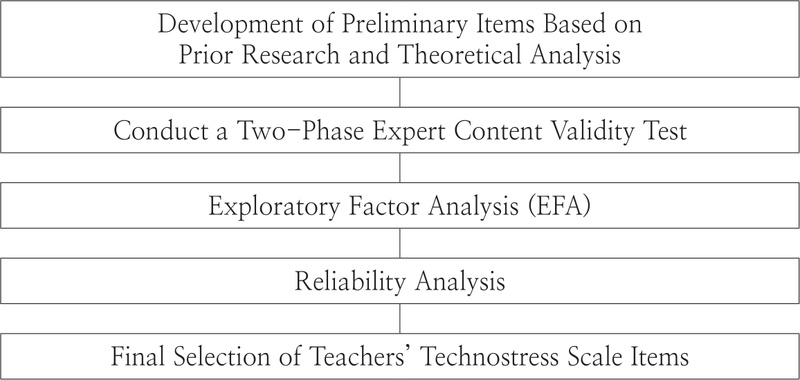
Table 1.

Components of JD-R

Component Sub-Dimensions
Job Demands Workload, Time Pressure, Role Conflict, Emotional Demands, etc
Job Resources Social Support, Autonomy, Feedback, etc

Table 2.

Components of the Extended JD-R

Component Description Sub Dimensions
Job Resources Physical, Psychological, Social, or Organizational aspects of the job that require sustained physical or psychological effort and are therefore associated with certain physiological and psychological costs. Autonomy, Social Support, Feedback, Opportunities for Development, Coaching
Job Demands Physical, Psychological, Social, or Organizational aspects of the job that are functional in achieving work goals, reduce job demands and the associated physiological and psychological costs, and stimulate personal growth, learning, and development. Workload, Cognitive Demands, Emotional Demands, Role Conflict, Hassles
Personal Resources Aspects of the self that are generally linked to resiliency and refer to individuals’ sense of their ability to control and impact upon their environment successfully. Self-efficacy, Optimism, Resilience

Table 3.

Research Procedure

Table 4.

Components of the Teachers’ Technostress

Component Definition of Teachers’ Technostress
Job Demands Psychological and Cognitive Burdens Teachers Experience when Using Digital Tools e.g., Curriculum Change, Information Overload, Data Selection, Workload, Time Pressure
Job Resources External Supports that Help Alleviate Teachers' Digital Stress e.g., Support and Collaboration from Administrators and Colleagues, Training, Administrative Assistance
Personal Resources Internal Positive Psychological Assets of the Teacher e.g., Teaching Experience, Self-Efficacy, Resilience, Implementation Ability

Table 5.

JD-R Questionnaire (Bakker, 2014)

NO. Component Question Sub-Dimensions
JR1 Job Resources Do you have flexibility in the execution of your job? Autonomy
JR2 Do you have control over how your work is carried out?
JR3 Can you participate in decision-making regarding your work?
JR4 If necessary, can you ask your colleagues for help? Social Support
JR5 Can you count on your colleagues to support you, if difficulties arise in your work?
JR6 In your work, do you feel valued by your colleagues?
JR7 I receive sufficient information about my work objectives. Feedback
JR8 My job offers me opportunities to find out how well I do my work.
JR9 I receive sufficient information about the results of my work.
JR10 In my work, I have the opportunity to develop my strong points. Opportunities for Development
JR11 In my work, I can develop myself sufficiently.
JR12 My work offers me the possibility to learn new things.
JR13 My supervisor informs me whether he/she is satisfied with my work. Coaching
JR14 My supervisor shows consideration for my problems and desires regarding my work.
JR15 I feel valued by my supervisor.
JR16 My supervisor uses his/her influence to help me solve problems at work.
JR17 My supervisor is friendly and open to me.
JD1 Job Demands Do you have to work at speed? Work Pressure
JD2 Do you have too much work to do?
JD3 How often do you have to work extra hard in order to reach a deadline?
JD4 Do you work under time pressure?
JD5 Does your work require a lot of concentration? Cognitive Demands
JD6 Does your work demand enhanced care or precision?
JD7 Do you regard your work as mentally very straining?
JD8 Does your work require your constant attention?
JD9 Is your work emotionally demanding? Emotional Demands
JD10 In your work, are you confronted with things that personally touch you?
JD11 Do you face emotionally charged situations in your work?
JD12 In your work, do you deal with clients who incessantly complain?
JD13 In your work, do you have to deal with demanding clients?
JD14 Do you have to deal with clients who do not treat you with the appropriate respect and politeness?
JD15 I receive conflicting requests from two or more people. Role Conflict
JD16 I am unable to fulfill the conflicting expectations of my co-workers.
JD17 The expectations of my colleagues are in conflict.
JD18 At my work, different groups of people expect opposite things from me.
JD19 I have to deal with administrative hassles. Hassles
JD20 I have many hassles to go through to get projects/assignments done.
JD21 I have to go through a lot of red tape to get my job done.
JD22 I am confronted with unexpected hassles at work.
JD23 I have many hassles to go through to get my work done.
PR1 Personal Resources I am confident that I could deal effectively with unexpected events. Self-Efficacy
PR2 Thanks to my resourcefulness, I can handle unforeseen situations.
PR3 If I am in trouble, I can usually think of a good solution.
PR4 I can handle whatever comes my way.
PR5 I usually expect the best in uncertain times. Optimism
PR6 I am always optimistic about my future.
PR7 I agree with the statement "Every cloud has a silver lining".
PR8 On the whole I assume that more positive things will happen to me than nasty things.

Table 6.

Preliminary Questionnaire for Teachers’ Technostress

NO. Component Question Sub-Dimensions
JR1 Job Resources Do you have flexibility in the execution of your digital or information education? Autonomy
JR2 Do you have control over how your digital or information education is carried out?
JR3 Can you participate in decision-making regarding your digital or information education?
JR4 If necessary, can you ask your fellow teachers for help? Social Support
JR5 Can you count on your fellow teachers to support you, if difficulties arise in your digital or information education?
JR6 In your work, do you feel valued by your fellow teachers?
JR7 I receive sufficient information about the objectives of my digital or information education. Feedback
JR8 My job offers me opportunities to find out how well I do in digital or information education.
JR9 I receive sufficient information about the results of my digital or information education.
JR10 In my digital or information education, I have the opportunity to develop my strong points. Opportunities for Development
JR11 In my digital or information education, I can develop myself sufficiently.
JR12 My digital or information education offers me the possibility to learn new things.
JR13 My supervisor informs me whether he/she is satisfied with my digital or information education. Coaching
JR14 My supervisor shows consideration for my problems and desires regarding my digital or information education.
JR15 I feel valued by my supervisor.
JR16 My supervisor uses his/her influence to help me solve problems in my digital or information education.
JR17 My supervisor is friendly and open to me.
JD1 Job Demands Do you have to prepare lessons and work at speed? Work Pressure
JD2 Do you have too much work to do to prepare for digital or information education?
JD3 How often do you have to work extra hard in order to implement digital or information education?
JD4 Do you work under time pressure when delivering digital or information education?
JD5 Does your digital or information education require a lot of concentration? Cognitive Demands
JD6 Does your digital or information education demand enhanced care or precision?
JD7 Do you regard your digital or information education as mentally very straining?
JD8 Does your digital or information education require your constant attention?
JD9 Is your digital or information education emotionally demanding? Emotional Demands
JD10 In your digital or information education, are you confronted with things that personally touch you?
JD11 Do you face emotionally charged situations in your digital or information education?
JD12 In your digital or information education, do you deal with students, parents, or colleagues who incessantly complain?
JD13 In your education, do you have to deal with demanding students, parents, or administrators?
JD14 Do you have to deal with people who do not treat you with the appropriate respect and politeness?
JD15 I receive conflicting requests from two or more people regarding my digital or information education. Role Conflict
JD16 I am unable to fulfill the conflicting expectations of my co-workers regarding digital or information education.
JD17 The expectations of my colleagues regarding digital or information education are in conflict.
JD18 At my school, different groups of people expect opposite things from me regarding digital or information education.
JD19 I have to deal with administrative hassles related to digital or information education. Hassles
JD20 I have many hassles to go through to get digital or information education projects/assignments done.
JD21 I have to go through a lot of red tape to implement digital or information education.
JD22 I am confronted with unexpected hassles in my digital or information education.
JD23 I have many hassles to go through to get my digital or information education done.
PR1 Personal Resources I am confident that I could deal effectively with unexpected problems in digital or information education. Self-Efficacy
PR2 Thanks to my resourcefulness, I can handle unforeseen situations in digital or information education.
PR3 If I am in trouble, I can usually think of a good solution.
PR4 I can handle whatever comes my way.
PR5 I usually expect the best in uncertain times. Optimism
PR6 I am always optimistic about my future.
PR7 I agree with the statement "Every cloud has a silver lining".
PR8 On the whole I assume that digital transformation will bring more positive than negative impacts.

Table 7.

Expert panel participating in validity review

Profession Degree Career
A Professor Ph.D. 15
B Elem. Teacher Ph.D. 16
C Elem. Teacher Master 16
D Elem. Teacher Master 12
E Elem. Teacher Master 12
F Elem. Teacher Master 11
G Elem. Teacher Master 10
H Elem. Teacher Master 10
I Elem. Teacher Master 8
J Info. Teacher Master 11

Table 8.

1st Content Validity Evaluation

NO. CVR NO. CVR NO. CVR
Job Resources JR1 0.8 JR7 1 JR13 0.6
JR2 1 JR8 1 JR14 1
JR3 0.8 JR9 1 JR15 0.6
JR4 0.8 JR10 1 JR16 1
JR5 1 JR11 1 JR17 0.6
JR6 0.6 JR12 1
Job Demands JD1 0.6 JD9 0.8 JD17 1
JD2 1 JD10 0.8 JD18 1
JD3 0.8 JD11 0.8 JD19 1
JD4 1 JD12 1 JD20 1
JD5 1 JD13 0.2 JD21 1
JD6 1 JD14 0.2 JD22 0.8
JD7 1 JD15 1 JD23 0.8
JD8 1 JD16 1
Personal Resources PR1 1 PR4 0.6 PR7 0.6
PR2 1 PR5 0.6 PR8 0.8
PR3 0.6 PR6 0.6

Table 9.

Revised Questionnaire for Teachers’ Technostress

NO. Component Question
JR1 Job Resources Do you have flexibility in the execution of your digital or information education?
JR2 Do you have control over how your digital or information education is carried out?
JR3 Can you participate in decision-making regarding your digital or information education?
JR4 If necessary, can you ask your fellow teachers for help?
JR5 Can you count on your fellow teachers to support you, if difficulties arise in your digital or information education?
JR6 In your digital or information education, do you feel valued by your fellow teachers?
JR7 I receive sufficient information about the objectives of my digital or information education.
JR8 My job offers me opportunities to find out how well I do in digital or information education.
JR9 I receive sufficient information about the results of my digital or information education.
JR10 I feel that digital or information education content are sufficiently reflected in school.
JR11 In my digital or information education, I have the opportunity to develop my strong points.
JR12 In my digital or information education, I can develop myself sufficiently.
JR13 My digital or information education offers me the possibility to learn new things.
JR14 My supervisor informs me whether he/she is positively evaluated with my digital or information education.
JR15 My supervisor shows consideration for my problems and desires regarding my digital or information education.
JR16 I feel valued by my supervisor in my digital or information education.
JR17 My supervisor uses his/her influence to help me solve problems in my digital or information education.
JD18 My supervisor is friendly and open to me regarding my digital or information education.
JD1 Job Demands Do you have to prepare lessons and work at speed when conducting digital or information education?
JD2 Do you have too much work to do to prepare for digital or information education?
JD3 How often do you have to work extra hard in order to implement digital or information education?
JD4 Do you work under time pressure when delivering digital or information education?
JD5 Does your digital or information education require a lot of concentration?
JD6 Does your digital or information education demand enhanced care or precision?
JD7 Do you regard your digital or information education as mentally very straining?
JD8 Does your digital or information education require your constant attention?
JD9 Is your digital or information education emotionally demanding?
JD10 In your digital or information education, are you confronted with things that personally touch you?
JD11 Do you face emotionally charged situations in your digital or information education?
JD12 In your digital or information education, do you deal with students, parents, or colleagues who incessantly complain?
JD13 In your digital or information education, do you have to deal with demanding students, parents, or administrators?
JD14 Do you have to deal with people in your digital or information education who do not treat you with the appropriate respect and politeness?
JD15 Do you feel discouraged compared to other teachers when using new technologies?
JD16 Do you feel that digital-based instruction has more negative effects, such as reduced student attention and classroom disruptions?
JD17 I receive conflicting requests from two or more people regarding my digital or information education.
JD18 I am unable to fulfill the conflicting expectations of my co-workers regarding digital or information education.
JD19 The expectations of my colleagues regarding digital or information education are in conflict.
JD20 At my school, different groups of people expect opposite things from me regarding digital or information education.
JD21 Do you feel confused in your role as a teacher while preparing for digital-based lesson or managing digital devices?
JD22 Do you feel compelled to use digital-based education or digital devices?
JD23 I have to deal with administrative hassles related to digital or information education.
JD24 I have many hassles to go through to get digital or information education projects/assignments done.
JD25 I have to go through a lot of red tape to implement digital or information education.
JD26 I am confronted with unexpected hassles in my digital or information education.
JD27 I have many hassles to go through to get my digital or information education done.
JD28 I feel uncomfortable using and managing multiple devices and learning/administrative platforms.
JD29 I have difficulty because the digital tools I use for teaching and administrative tasks are frequently updated.
PR1 Personal Resources I am confident that I could deal effectively with unexpected problems in digital or information education.
PR2 Thanks to my resourcefulness, I can handle unforeseen situations in digital or information education.
PR3 If I am in trouble during digital or information education, I can usually think of a good solution.
PR4 I can handle whatever comes my way in digital or information education.
PR5 I usually expect the best in uncertain digital education situations.
PR6 I am always optimistic about my future with digital or information education.
PR7 I agree with the idea that, despite difficulties, digital-based changes will ultimately bring positive results.
PR8 On the whole I assume that digital transformation will bring more positive than negative impacts.

Table 10.

2nd Content Validity Evaluation

NO. CVR NO. CVR NO. CVR
Job Resources JR1 1 JR7 1 JR13 0.8
JR2 1 JR8 1 JR14 1
JR3 1 JR9 1 JR15 1
JR4 1 JR10 1 JR16 1
JR5 1 JR11 0.8 JR17 0.8
JR6 0.8 JR12 0.8 JR18 0.8
Job Demands JD1 0.8 JD11 1 JD21 1
JD2 1 JD12 0.8 JD22 1
JD3 0.8 JD13 0.8 JD23 1
JD4 0.8 JD14 0.8 JD24 1
JD5 0.8 JD15 1 JD25 1
JD6 1 JD16 1 JD26 1
JD7 1 JD17 0.8 JD27 1
JD8 0.8 JD18 0.8 JD28 1
JD9 1 JD19 0.8 JD29 1
JD10 0.8 JD20 0.8
Personal Resources PR1 1 PR4 0.8 PR7 0.8
PR2 1 PR5 0.8 PR8 0.8
PR3 0.8 PR6 0.8

Table 11.

KMO and Bartlett's Test of Sphericity

KMO Measure of Sampling Adequacy .912
Bartlett's Test of Sphericity Approx. Chi-Square 9058.665
df 1485
Significance (p-value) .000

Table 12.

Communalities

Initial Extraction
KMO=.912, Bartlett χ²=9058.665(df=1485, p=.000)
JR_Autonomy1 1.000 .329
JR_Autonomy2 1.000 .533
JR_Autonomy3 1.000 .495
JR_Social Support1 1.000 .510
JR_Social Support2 1.000 .517
JR_Social Support3 1.000 .609
JR_Feedback1 1.000 .530
JR_Feedback2 1.000 .504
JR_Feedback3 1.000 .549
JR_Feedback4 1.000 .547
JR_Coaching1 1.000 .540
JR_Coaching2 1.000 .495
JR_Coaching3 1.000 .488
JR_Coaching4 1.000 .467
JR_Coaching5 1.000 .538
JR_Opportunities for Development1 1.000 .658
JR_Opportunities for Development2 1.000 .576
JR_Opportunities for Development3 1.000 .628
JD_Work Pressure1 1.000 .434
JD_Work Pressure2 1.000 .424
JD_Work Pressure3 1.000 .616
JD_Work Pressure4 1.000 .641
JD_Cognitive Demands1 1.000 .495
JD_Cognitive Demands2 1.000 .501
JD_Cognitive Demands3 1.000 .612
JD_Cognitive Demands4 1.000 .613
JD_Emotional Demands1 1.000 .560
JD_Emotional Demands2 1.000 .530
JD_Emotional Demands3 1.000 .547
JD_Emotional Demands4 1.000 .509
JD_Emotional Demands5 1.000 .566
JD_Emotional Demands6 1.000 .560
JD_Emotional Demands7 1.000 .406
JD_Emotional Demands8 1.000 .476
JD_Role Conflict1 1.000 .729
JD_Role Conflict2 1.000 .588
JD_Role Conflict3 1.000 .606
JD_Role Conflict4 1.000 .618
JD_Role Conflict5 1.000 .500
JD_Role Conflict6 1.000 .589
JD_Hassles1 1.000 .589
JD_Hassles2 1.000 .658
JD_Hassles3 1.000 .622
JD_Hassles4 1.000 .589
JD_Hassles5 1.000 .608
JD_Hassles6 1.000 .557
JD_Hassles7 1.000 .518
PR_Self-Efficacy1 1.000 .589
PR_Self-Efficacy2 1.000 .650
PR_Self-Efficacy3 1.000 .620
PR_Self-Efficacy4 1.000 .631
PR_Optimism1 1.000 .616
PR_Optimism2 1.000 .517
PR_Optimism3 1.000 .510
PR_Optimism4 1.000 .502

Table 13.

Rotated Component Matrix

Component
1 2 3
JD_Work Pressure4 .791 -.019 .035
JD_Cognitive Demands4 .777 -.097 .046
JD_Hassles2 .774 -.158 .196
JD_Work Pressure3 .773 .012 .043
JD_Hassles3 .766 -.172 .105
JD_Hassles1 .756 -.102 .105
JD_Role Conflict6 .755 -.041 .163
JD_Hassles5 .749 -.093 .198
JD_Cognitive Demands3 .746 -.127 .188
JD_Role Conflict2 .730 -.120 -.205
JD_Emotional Demands2 .725 -.039 -.054
JD_Role Conflict1 .721 -.122 -.436
JD_Emotional Demands3 .719 -.108 -.076
JD_Emotional Demands1 .711 -.074 .232
JD_Hassles4 .705 -.093 .300
JD_Role Conflict3 .695 -.047 -.358
JD_Role Conflict5 .692 -.143 .016
JD_Emotional Demands5 .690 -.013 -.302
JD_Emotional Demands4 .688 -.047 -.207
JD_Hassles7 .674 -.162 .157
JD_Role Conflict4 .670 -.102 -.391
JD_Emotional Demands6 .667 -.141 -.317
JD_Emotional Demands8 .664 -.187 -.034
JD_Cognitive Demands1 .663 .083 .201
JD_Hassles6 .661 -.063 .321
JD_Cognitive Demands2 .601 .139 .342
JR_Opportunities for Development3 -.173 .767 .005
JR_Opportunities for Development1 -.151 .767 -.218
JR_Social Support3 -.102 .758 .173
JR_Coaching1 -.103 .739 .029
JR_Opportunities for Development2 -.116 .738 -.125
JR_Coaching5 -.112 .729 -.043
JR_Autonomy2 -.032 .707 -.117
JR_Feedback1 -.088 .706 -.157
JR_Coaching3 -.100 .694 -.078
JR_Social Support2 .062 .694 .221
JR_Coaching2 -.113 .690 -.141
JR_Coaching4 -.042 .677 -.138
JR_Social Support1 -.012 .674 .231
JR_Feedback4 -.089 .658 -.325
JR_Autonomy3 -.096 .657 -.220
JR_Feedback2 .004 .651 -.285
PR_Optimism4 .114 -.636 .283
JR_Feedback3 .105 .633 -.363
PR_Optimism3 .141 -.609 .353
PR_Optimism1 .128 -.556 .547
PR_Optimism2 .206 -.548 .423
PR_Self-Efficacy2 .052 -.409 .706
PR_Self-Efficacy1 .006 -.371 .688
PR_Self-Efficacy3 .130 -.438 .657
PR_Self-Efficacy4 .086 -.469 .643
Eigenvalue 13.591 10.819 6.827
Variance Explained (%) 26.648 21.213 13.387
Cumulative Variance (%) 26.648 47.862 61.249

Table 14.

Reliability of Job Resources

Mean if Item Deleted Variance if Item Deleted Corrected Item-Total Correlation Cronbach's α if Item Deleted
Cronbach’s α=.942
JR_Autonomy2 55.2250 135.009 .676 .939
JR_Autonomy3 55.3050 135.248 .671 .939
JR_Social Support1 54.8500 139.435 .553 .942
JR_Social Support2 54.9250 139.276 .575 .941
JR_Social Support3 54.8900 137.948 .664 .939
JR_Feedback1 55.3000 133.769 .721 .938
JR_Feedback2 55.3350 136.626 .659 .940
JR_Feedback3 55.6250 135.110 .672 .939
JR_Feedback4 55.5900 133.057 .713 .938
JR_Coaching1 55.2150 136.260 .698 .939
JR_Coaching2 55.6400 132.473 .711 .938
JR_Coaching3 55.3200 134.279 .686 .939
JR_Coaching4 55.6300 134.084 .683 .939
JR_Coaching5 55.4750 133.688 .733 .938
JR_Opportunities for Development1 55.1650 134.661 .754 .938
JR_Opportunities for Development2 55.1700 136.383 .689 .939
JR_Opportunities for Development3 55.1000 136.774 .699 .939

Table 15.

Reliability of Job Demands

Mean if Item Deleted Variance if Item Deleted Corrected Item-Total Correlation Cronbach's α if Item Deleted
Cronbach’s α=.962
JD_Work Pressure3 89.5600 339.082 .739 .960
JD_Work Pressure4 89.6450 337.728 .763 .960
JD_Cognitive Demands1 89.3900 345.586 .619 .961
JD_Cognitive Demands2 89.3000 347.126 .554 .962
JD_Cognitive Demands3 89.4300 339.040 .730 .960
JD_Cognitive Demands4 89.5500 338.510 .757 .960
JD_Emotional Demands1 89.5550 338.278 .688 .961
JD_Emotional Demands2 89.8600 337.227 .694 .961
JD_Emotional Demands3 89.7850 337.335 .698 .961
JD_Emotional Demands4 89.5900 339.911 .658 .961
JD_Emotional Demands5 89.8600 339.086 .655 .961
JD_Emotional Demands6 89.8300 338.172 .645 .961
JD_Emotional Demands8 89.6250 340.487 .654 .961
JD_Role Conflict1 90.0100 338.020 .702 .961
JD_Role Conflict2 89.6850 337.744 .712 .961
JD_Role Conflict3 89.8200 338.490 .667 .961
JD_Role Conflict4 90.0100 341.126 .649 .961
JD_Role Conflict5 89.6800 337.676 .678 .961
JD_Role Conflict6 89.5200 338.000 .732 .960
JD_Hassles1 89.4550 337.606 .738 .960
JD_Hassles2 89.5200 337.849 .764 .960
JD_Hassles3 89.5300 337.929 .756 .960
JD_Hassles4 89.4300 341.814 .686 .961
JD_Hassles5 89.4800 340.050 .732 .960
JD_Hassles6 89.4600 341.968 .638 .961
JD_Hassles7 89.5450 340.601 .660 .961

Table 16.

Reliability of Personal Resources

Mean if Item Deleted Variance if Item Deleted Corrected Item-Total Correlation Cronbach's α if Item Deleted
Cronbach’s α=.962
PR_Self-Efficacy1 10.2400 28.002 .760 .914
PR_Self-Efficacy2 10.1500 27.013 .781 .912
PR_Self-Efficacy3 10.2800 26.896 .832 .907
PR_Self-Efficacy4 10.2750 27.145 .802 .910
PR_Optimism1 10.1800 27.897 .777 .912
PR_Optimism2 10.3500 27.857 .714 .919
PR_Optimism3 10.4350 28.739 .683 .921

Table 17.

Number of Items in Final Questionnaire

Component Sub-Dimensions Number
Job Resources Autonomy 2
Social Support 3
Feedback 4
Coaching 5
Opportunities for Development 3
Job Demands Work Pressure 2
Cognitive Demands 4
Emotional Demands 7
Role Conflict 6
Hassles 7
Personal Resources Self-Efficacy 4
Optimism 3

Final Questionnaire for Teachers’ Technostress

NO. Component Question Sub Dimensions
JR1 Job Resources Do you have control over how your digital or information education is carried out? Autonomy
JR2 Can you participate in decision-making regarding your digital or information education?
JR3 If necessary, can you ask your fellow teachers for help? Social Support
JR4 Can you count on your fellow teachers to support you, if difficulties arise in your digital or information education?
JR5 In your digital or information education, do you feel valued by your fellow teachers?
JR6 I receive sufficient information about the objectives of my digital or information education. Feedback
JR7 My job offers me opportunities to find out how well I do in digital or information education.
JR8 I receive sufficient information about the results of my digital or information education.
JR9 I feel that digital or information education content are sufficiently reflected in school.
JR10 In my digital or information education, I have the opportunity to develop my strong points. Opportunities for Development
JR11 In my digital or information education, I can develop myself sufficiently.
JR12 My digital or information education offers me the possibility to learn new things.
JR13 My supervisor informs me whether he/she is positively evaluated with my digital or information education. Coaching
JR14 My supervisor shows consideration for my problems and desires regarding my digital or information education.
JR15 I feel valued by my supervisor in my digital or information education.
JR16 My supervisor uses his/her influence to help me solve problems in my digital or information education.
JR17 My supervisor is friendly and open to me regarding my digital or information education.
JD1 Job Demands How often do you have to work extra hard in order to implement digital or information education? Work Pressure
JD2 Do you work under time pressure when delivering digital or information education?
JD3 Does your digital or information education require a lot of concentration? Cognitive Demands
JD4 Does your digital or information education demand enhanced care or precision?
JD5 Do you regard your digital or information education as mentally very straining?
JD6 Does your digital or information education require your constant attention?
JD7 Is your digital or information education emotionally demanding? Emotional Demands
JD8 In your digital or information education, are you confronted with things that personally touch you?
JD9 Do you face emotionally charged situations in your digital or information education?
JD10 In your digital or information education, do you deal with students, parents, or colleagues who incessantly complain?
JD11 In your digital or information education, do you have to deal with demanding students, parents, or administrators?
JD12 Do you have to deal with people in your digital or information education who do not treat you with the appropriate respect and politeness?
JD13 Do you feel that digital-based instruction has more negative effects, such as reduced student attention and classroom disruptions?
JD14 I receive conflicting requests from my supervisor and fellow teachers regarding my digital or information education. Role Conflict
JD15 I am unable to fulfill the conflicting expectations of my supervisor and parents regarding digital or information education.
JD16 The expectations of my colleagues regarding digital or information education are in conflict.
JD17 At my school, my supervisor and parents expect opposite things from me regarding digital or information education.
JD18 Do you feel confused in your role as a teacher while preparing for digital-based lesson or managing digital devices?
JD19 Do you feel compelled to use digital-based education or digital devices?
JD20 I have to deal with administrative hassles related to digital or information education. Hassles
JD21 I have many hassles to go through to get digital or information education projects/assignments done.
JD22 I have to go through a lot of red tape to implement digital or information education.
JD23 I am confronted with unexpected hassles in my digital or information education.
JD24 I have many hassles to go through to get my digital or information education done.
JD25 I feel uncomfortable using and managing multiple devices and learning/administrative platforms.
JD26 I have difficulty because the digital tools I use for teaching and administrative tasks are frequently updated.
PR1 Personal Resources I am confident that I could deal effectively with unexpected problems in digital or information education. Self Efficacy
PR2 Thanks to my resourcefulness, I can handle unforeseen situations in digital or information education.
PR3 If I am in trouble during digital or information education, I can usually think of a good solution.
PR4 I can handle whatever comes my way in digital or information education.
PR5 I usually expect the best in uncertain digital education situations. Optimism
PR6 I am always optimistic about my future with digital or information education.
PR7 I agree with the idea that, despite difficulties, digital-based changes will ultimately bring positive results.

교사의 테크노스트레스 측정 도구

NO. 요소 질문 하위 요소
JR1 직무자원 정보 관련 교육 내용이나 방식을 교사가 선택할 수 있다고 느끼십니까? 사회적 지원
JR2 디지털 기반 수업이나 정보 교육에 관련된 의사결정 과정에 참여할 수 있습니까?
JR3 도움이 필요할 때 동료 교사에게 도움을 요청할 수 있습니까? 사회적 지원
JR4 정보 교육이나 디지털 기반 수업 중 어려움이 있을 때 동료 교사들이 도와줄 것이라 믿습니까?
JR5 동료 교사들이 디지털 기반 수업이나 정보 교육에 대한 나의 의견을 이해하고 존중한다고 느끼십니까?
JR6 정보 교육이나 디지털 기반 수업에 대해 충분한 안내를 받고 있습니까? 피드백
JR7 나의 디지털 도구 활용 수준을 확인할 수 있는 기회가 제공됩니까?
JR8 정보 수업이나 디지털 기반 수업에 대해 충분한 피드백을 받고 있습니까?
JR9 새로운 기술이나 정보 교육 내용이 학교의 실제 교육활동을 충분히 반영하고 있다고 느끼십니까?
JR10 정보 교육이나 디지털 기반 수업에서 나의 강점을 발전시킬 기회가 있습니까? 개발 기회
JR11 정보 교육이나 디지털 기반 수업을 통해 충분히 성장할 수 있다고 느끼십니까?
JR12 정보 교육이나 디지털 기반 수업을 통해 새로운 것을 배울 수 있는 기회가 주어집니까?
JR13 학교 관리자나 교육청은 교사들의 디지털 기반 수업 운영이나 정보 교육에 대해 긍정적으로 평가합니까? 코칭
JR14 학교 관리자나 교육청은 디지털 기반 수업이나 정보교육에 대한 교사의 입장을 배려합니까?
JR15 학교 관리자나 교육청은 디지털 기반 수업 환경에서 교사의 역할과 기여를 중요하게 여긴다고 느끼십니까?
JR16 학교 관리자나 교육청은 디지털 기반 수업에서 발생하는 문제를 해결하기 위해 도와줍니까?
JR17 학교 관리자나 교육청은 디지털 기반 수업이나 정보 교육에 있어 교사에게 친근하고 개방적입니까?
JD1 직무요구 정보 교육이나 디지털 기반 수업을 하기 위해서 무리할 때가 자주 있습니까? 업무량/시간압박
JD2 시간에 쫓기며 정보 교육이나 디지털 기반 수업을 진행하고 있습니까?
JD3 정보 교육이나 디지털 기반 수업을 진행하는데 많은 집중력이 요구됩니까? 인지적 부담
JD4 정보 교육이나 디지털 기반 수업에서 높은 수준의 주의력이나 정확한 사용 방법 숙지가 필요합니까?
JD5 정보 교육이나 디지털 기반 수업이 정신적으로 매우 피곤하다고 느끼십니까?
JD6 정보 교육이나 디지털 기반 수업이 끊임없는 집중을 요구합니까?
JD7 디지털 기반 변화가 정서적으로 부담스럽습니까? 정서적 부담
JD8 디지털 기반 변화가 개인적인 감정에 영향을 주는 상황을 자주 접합니까?
JD9 디지털 기반 변화로 인해 긴장된 상황을 자주 경험합니까?
JD10 정보 교육이나 디지털 기반 수업 및 행정 과정상에서 불평하는 사람들과 지속적으로 마주합니까?
JD11 디지털 기반 수업이나 정보 교육과 관련하여 요구가 많은 학생, 학부모 또는 관리자와 자주 접합니까?
JD12 디지털 기반 수업이나 정보 교육을 운영하는 과정에서 예의 없이 대하는 학생, 학부모 또는 관리자와 자주 마주합니까?
JD13 디지털 기반 수업이 학생들의 집중력 저하, 수업 방해 등 부정적 효과가 더 크다고 느끼십니까?
JD14 정보 교육이나 디지털 기반 수업과 관련하여 관리자와 교사로부터 상충되는 요청을 받습니까? 역할 갈등
JD15 정보 교육이나 디지털 기반 수업과 관련하여 관리자, 학부모의 기대를 모두 충족시키기 어렵습니까?
JD16 정보 교육이나 디지털 기반 수업과 관련하여 학교 구성원들의 기대가 서로 충돌합니까?
JD17 정보 교육이나 디지털 기반 수업과 관련하여 관리자, 학부모, 동료 교사가 나에게 상반된 것을 기대합니까?
JD18 디지털 기반 수업을 준비하거나 정보 기기를 관리하면서 교사로서 혼란을 느끼십니까?
JD19 디지털 기반 수업이나 정보 기기의 활용이 강요된다고 느끼십니까?
JD20 정보 교육이나 디지털 기반 수업과 관련하여 행정적 번거로움을 자주 겪고 있습니까? 일상적 방해요소
JD21 디지털 기반 프로젝트 수업을 진행하는 데 많은 불편함이 따릅니까?
JD22 디지털 기반 변화에 따라 시스템 절차상의 복잡함을 많이 겪고 있습니까?
JD23 디지털 기반 변화로 인해 예기치 못한 문제들이 자주 발생합니까?
JD24 정보 교육이나 디지털 기반 수업하기 위해 겪는 어려움이 많습니까?
JD25 여러 개의 기기나 학습·업무 플랫폼을 사용·관리하는 것이 불편함이 따릅니까?
JD26 교육활동 및 업무에 사용하는 디지털 도구가 자주 업데이트되어 어려움이 있습니까?
PR1 개인자원 예기치 못한 디지털 기기나 플랫폼 문제에도 효과적으로 대처할 수 있다고 자신합니다. 자기 효능감
PR2 나의 유연한 대처 능력 덕분에 예기치 못한 예기치 못한 시스템 오류를 해결할 수 있습니다.
PR3 디지털 기반 수업이나 정보 교육 중 문제가 생기면 대체로 좋은 해결책을 떠올릴 수 있습니다.
PR4 디지털 기반 수업이나 정보 교육 중 예기치 못한 문제가 발생해도 잘 해결할 수 있습니다.
PR5 디지털 기반 수업이나 정보 교육 중 불확실한 문제가 발생해도 긍정적인 결과를 기대합니다. 낙관성
PR6 나는 디지털 기반 교육 변화 속에서도 교사로서의 미래에 대해 낙관적으로 생각합니다.
PR7 디지털 기반 변화에 어려움이 있어도, 결국 좋은 방향으로 나아갈 것이라 믿습니다.